The word she'd highlighted
Cass remembered patience. The rest of the reading had almost disappeared around it.

Cass had highlighted patience so thoroughly that the paper was beginning to soften. Each time she reopened the reading, her eyes went straight to the yellow patch. She no longer remembered the sentence that came before it. She remembered what she wanted the word to mean.
The reading was three weeks old. She'd asked about the quieter period after an argument with her partner, when she kept initiating cheerful conversations. Somewhere in the answer, she'd found permission to keep waiting for their usual closeness to return.
Now every decent evening felt like confirmation, and every awkward one sent her back to the same page.
This time she started at the top. She wrote the date in a notebook and finished one sentence: this reading explored what I was carrying after our disagreement. It hadn't asked whether they would remain together forever. She'd enlarged the subject each time she revisited it.
She read from beginning to end without stopping at the yellow line. Then she copied the position labels beside the cards. Patience belonged to a paragraph about invested attention. It wasn't an instruction addressed to her entire relationship.
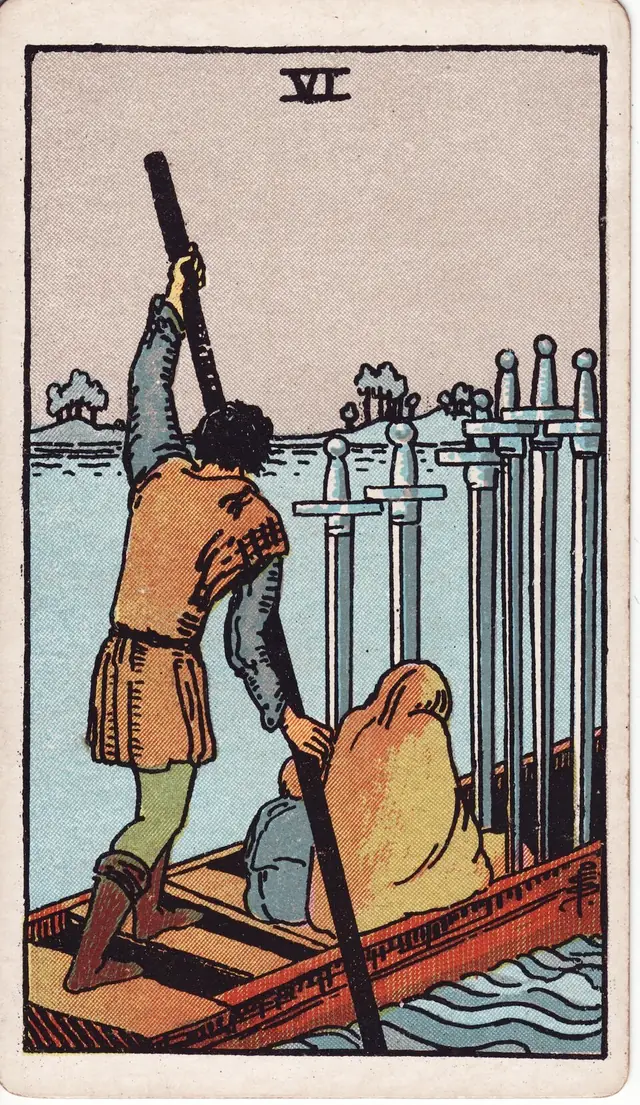
Six of SwordsThe boat moves while its passengers carry the swords with them. In the original context, the image could describe the aftermath of an argument, without announcing a reunion or separation.
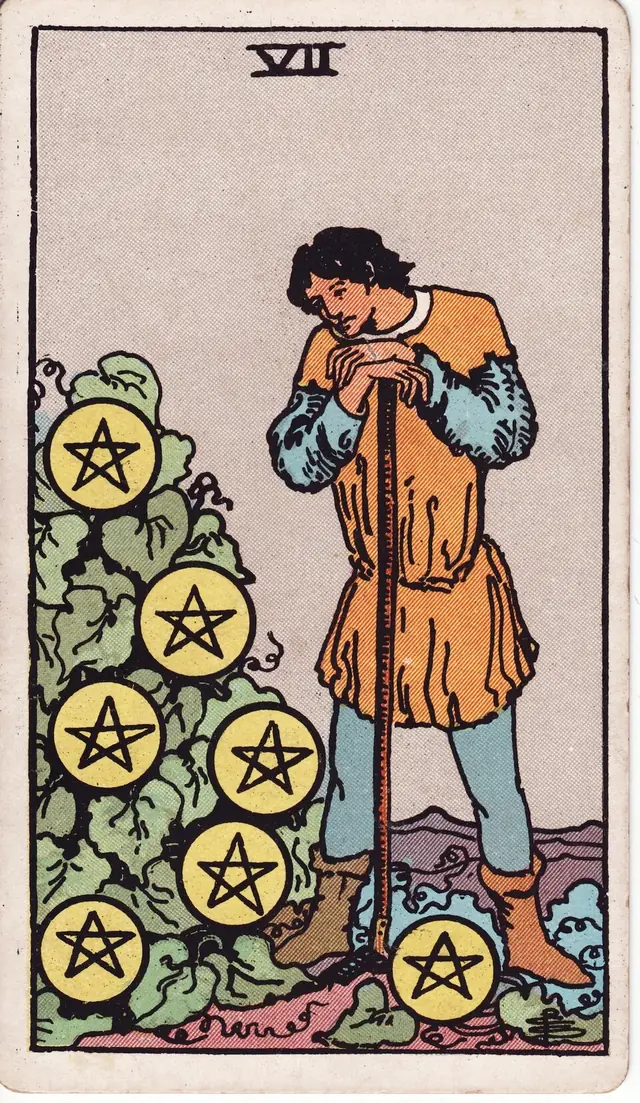
Seven of PentaclesThe gardener pauses over the crop. In this position, the reading concerned how often Cass checked whether normal closeness had returned. Patience wasn't a promise that her waiting would produce it.
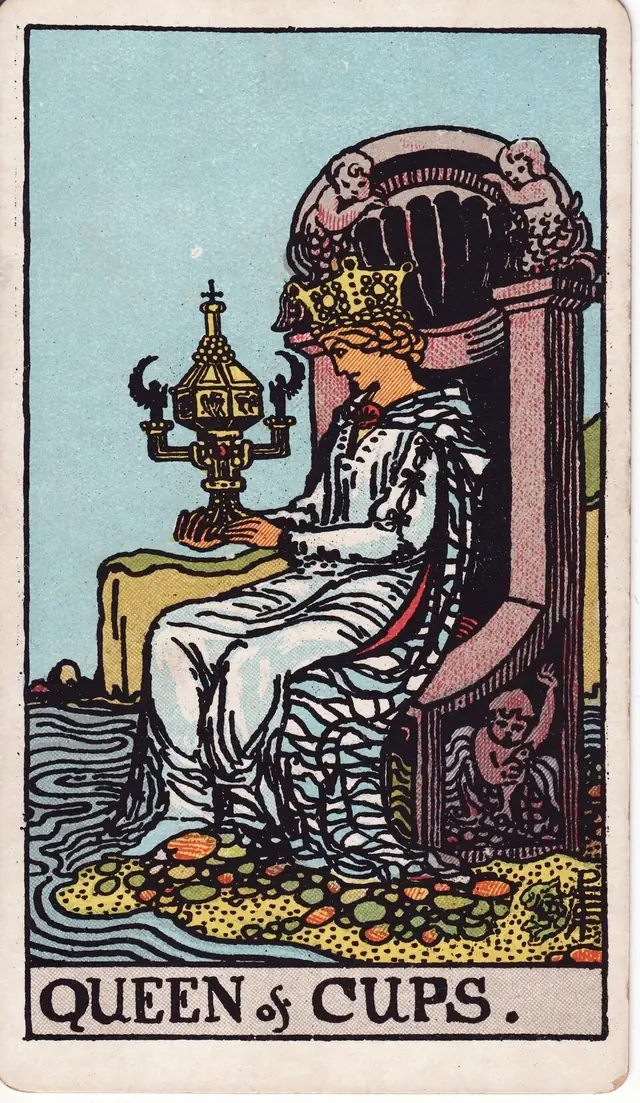
Queen of CupsThe queen attends to her cup. The final position could return attention to the hurt Cass kept setting aside while trying to make their conversations comfortable again.
Seen together, the cards moved through aftermath, watching, and feeling. Cass had remembered the middle and omitted the end. She'd been asking her own hurt to stay quiet until the relationship felt easier, then treating its continued presence as evidence that she hadn't waited well enough.
She made three short notes. She recognized the effort of monitoring their evenings. She was considering whether she'd hidden some hurt behind being pleasant. She didn't recognize one description of the original argument and wrote that down too. She didn't need to force every sentence to fit for one distinction to be useful.
Under the notes, Cass added that later events might change her understanding, but they couldn't rewrite what she'd asked three weeks earlier. If something new mattered, she could add a dated observation. Reopening the answer for the same reassurance hadn't added information, and uncertainty by itself didn't mean she needed another reading.
At lunch, her friend asked how things were at home. Cass began to say they were nearly back to normal. Then she stopped. She said they'd had an argument and she was still hurt, though she'd been trying very hard to appear otherwise.
Her friend put down her fork and listened. Cass heard the rest of her own sentence for the first time.