The part his apology left out.
Justice as intentions can suggest a wish to act deliberately, face consequences or put a relationship on clearer terms.

Zoya found her name in the event programme between the welcome speech and the list of raffle prizes. Photography: Zoya. Underneath was a request that the photographer arrive two hours before the family anniversary party.
She'd agreed to attend. Graham had agreed, on her behalf, that she'd bring her camera and work through the afternoon. He'd also forgotten their conversation after the previous gathering, when she'd explained that she wanted to enjoy family occasions as a guest sometimes.
Now he wanted to make things right. He'd said so three times before she'd taken off her coat. He was sorry he'd assumed. He was also hurt that she'd left the planning meeting without him. Could they agree they'd both handled it badly?
Zoya wanted the apology to work. She also noticed that equal fault would end the conversation before they'd reached the commitment he'd made with her time.
Justice as intentions can suggest a wish to act deliberately, face consequences or put a relationship on clearer terms. Its upright sword and scales offer two related actions: weigh what happened, then make a distinction.
A considered intention may lead to repair, commitment or an honest answer someone finds painful. The card doesn't guarantee the preferred outcome.
Graham might sincerely want peace between them. The terms of that peace still mattered. His intention couldn't be assessed entirely through how sorry he sounded while Zoya remained responsible for carrying out his promise.
I agreed to come. I didn't agree to work.
He said everyone loved her photographs. She appreciated that. Being good at something didn't mean her time belonged to whoever needed it next.
Reversed Justice can suggest selective honesty, uneven terms or defending a position instead of understanding its effect. An apology may accumulate qualifications until the person receiving it has to abandon the original concern. These are patterns to examine in the actual exchange, not a verdict about someone's character from a card.
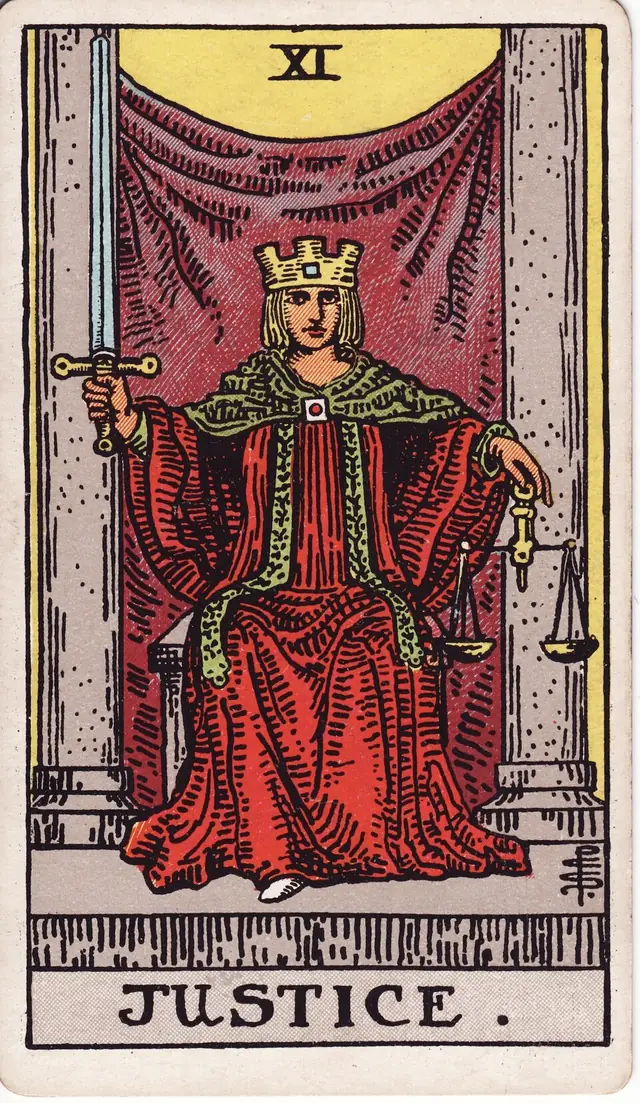
JusticeThe scales and sword ask for an accurate account. A wish to repair becomes accountable when the person who made a commitment corrects it and handles the consequences, rather than requiring someone else to comply.
Graham said the programmes had already gone out. His aunt would be embarrassed. Could Zoya do it this once, and they'd make sure it didn't happen again?
There was the part his apology had left out. He wanted to regret volunteering her without withdrawing the volunteer.
Zoya said he needed to speak to his aunt himself. She wouldn't be the photographer, and she wouldn't invent a scheduling problem to make his assumption sound like an unavoidable change.
The next evening, Graham told the organizer exactly what had happened. He'd offered something that wasn't his to offer. He arranged photographs with two relatives who agreed to take turns, and took responsibility for correcting the programme. Zoya wasn't asked to recruit, remind or rescue anyone.
At the party, she left her camera at home. Graham was busy for part of the afternoon carrying chairs and helping the people he'd recruited. Repair had become something he did, rather than something she made easier for him.
When the group photograph was called, Zoya stood beside her nephew in the second row. Someone else checked the edges. For once, she was in the picture.