The page she stopped showing him
Beth had accepted the apology. Her notebook still closed whenever he entered the room.

Beth used to leave her notebook open on the table. Now she shut it when Adrian came in, even if she was only writing a shopping list. He noticed the movement one Saturday and said he wasn't going to read it. She said she knew. Her hand stayed on the cover.
Three weeks earlier, he'd sent one of her poems to his sister. He'd said he thought she'd like it. Beth had read it aloud to him, embarrassed by how much she wanted his attention. She hadn't agreed to show anyone else. When his sister praised a line at lunch, Beth had understood what had happened.
Adrian apologized. He said he hadn't thought it was private because she hadn't asked him to keep it secret. Beth had said she shouldn't need to specify that every time. They had discussed it twice, both times ending with him saying he understood. Yet she still stopped writing when he entered the room.
Her tarot question began after the known event. She didn't need cards to investigate whether he had shared the poem; he'd told her he had. She wanted to understand what had changed in her experience of sharing, and what an apology hadn't yet addressed.


JusticeThe scales and sword could place consent and responsibility in view. Beth and Adrian had treated access to her words differently; that difference needed naming rather than another general reassurance.
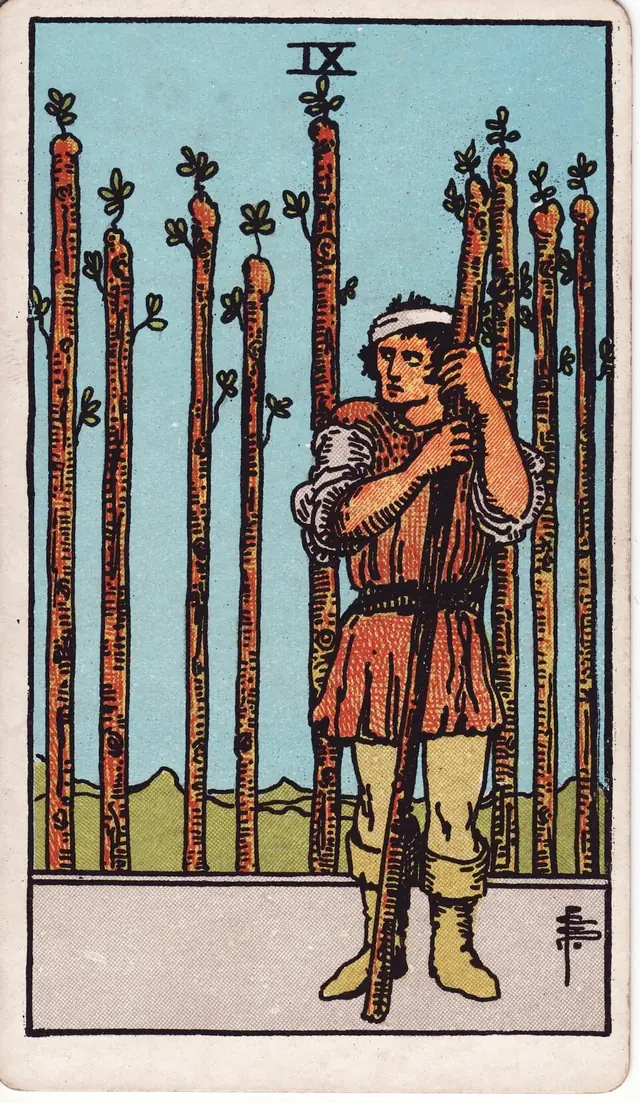
Nine of WandsThe watchful figure stands before a row of staffs. The image could hold Beth's protective response without deciding she was unreasonable, damaged, or required to lower it.
TemperanceWater moves carefully between two cups. Here, repair could involve repeated respect for a specific limit, with room for Beth's comfort to change at its own pace.
She realized she'd been arguing as if every kind of trust had vanished. It hadn't. She trusted him to keep plans and listen when she spoke. The changed part was narrower and important: she didn't know whether something offered privately would remain hers to share again.
That gave their next conversation a different subject. She explained that reading him a poem was an invitation into that moment, not permission to pass the page along. She asked him to check before sharing any of her unfinished work.
She also said she wasn't ready to show him the notebook again simply because they'd agreed.
Adrian said he could understand that. His response was something she had actually heard, rather than something a reading could verify on his behalf. Whether the new agreement became reliable would belong to their experience over time. Beth didn't need to promise an immediate return to how she'd felt before.
At her writing group the next week, she read eight lines aloud. They were the lines she chose, to people she'd chosen, after deciding she wanted their attention. When someone asked to photograph the page, Beth said she'd prefer to email the finished version. The notebook stayed open while she turned to the next poem.