Before the cards moved
Moses wanted a second perspective. First, he had to preserve the question he'd actually asked.

The cat was approaching the table when Moses remembered to take a photograph. Three cards, his notebook, a pencil rolling toward the edge. He caught the pencil first. By the time he lifted his phone, the Two of Cups was slightly crooked but still in its place.
He'd read the card as commitment and spent twenty minutes trying to make the other two confirm it. Now he wanted to bring the spread to a reader. He began typing the card names, then realized he could no longer remember whether the final position was advice or what needed attention.
The notebook held the answer. His original question was what deserved attention in an undefined connection. He and Peter had been dating for three months and hadn't discussed exclusivity. Moses copied the wording exactly, including the part about the connection being undefined.
It would have been easy to replace it with a more flattering description after seeing the first card.
He made a record in order: what feels present, Two of Cups; what I am waiting on, Seven of Pentacles; what needs naming, Justice. He added that all three were upright and he hadn't been using reversals. The deck was Rider–Waite–Smith.
A reader wouldn't need to identify the artwork from the cat's blurred tail in the photograph.
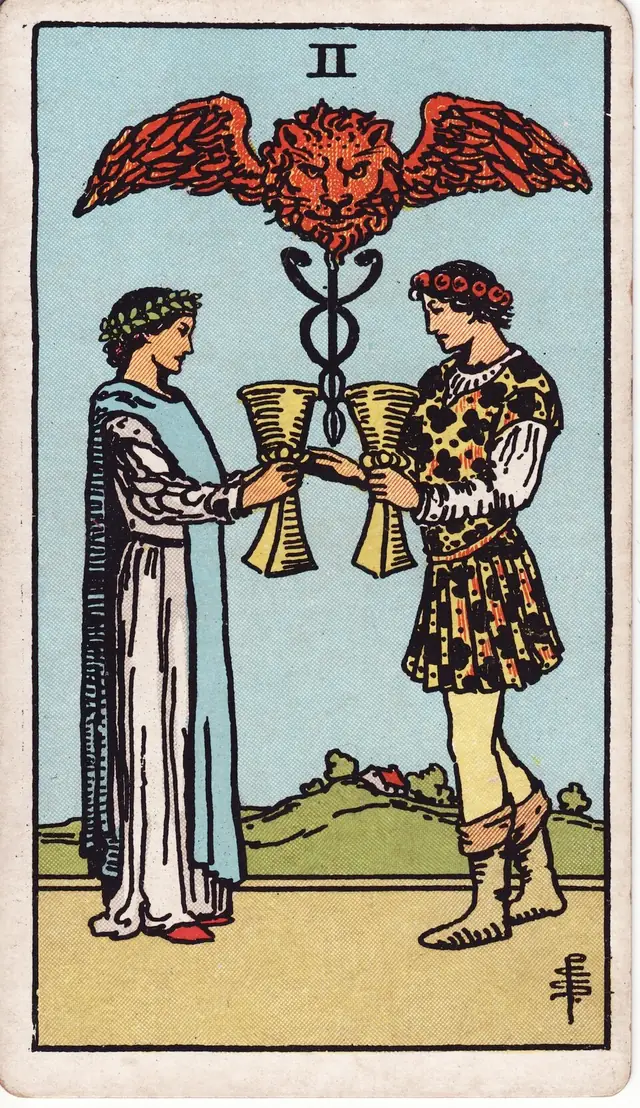
Two of CupsThe exchange between two figures could reflect the warmth Moses described. In this position, it didn't establish an exclusive agreement that neither person had discussed.
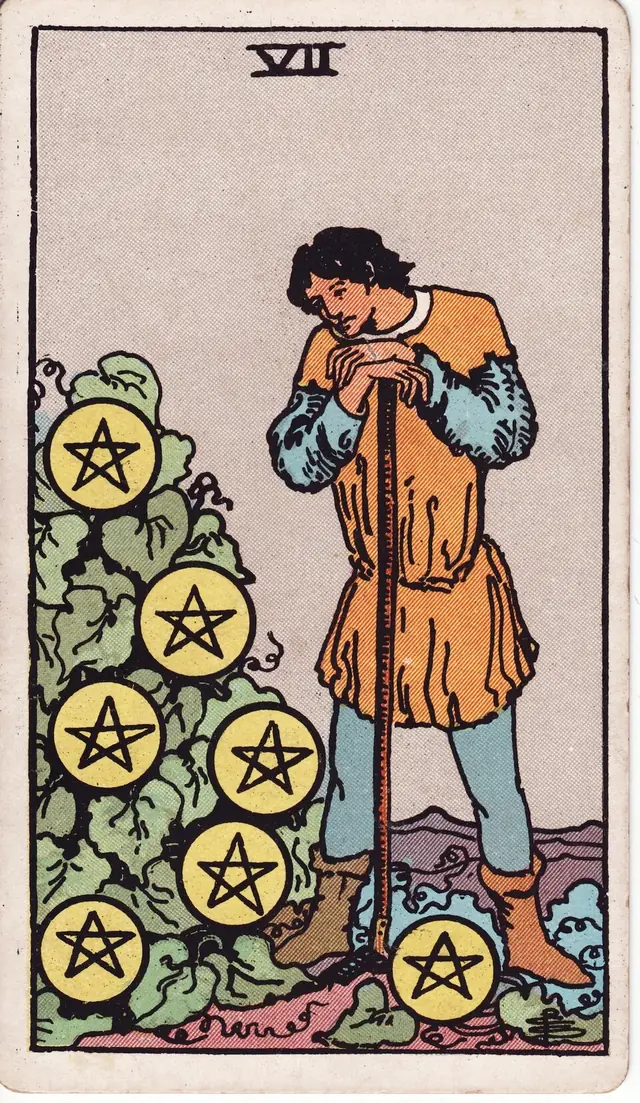
Seven of PentaclesThe gardener looks at the growing crop. Beside Moses's position label, the card could bring attention to his expectation that continued affection would eventually become a defined relationship.
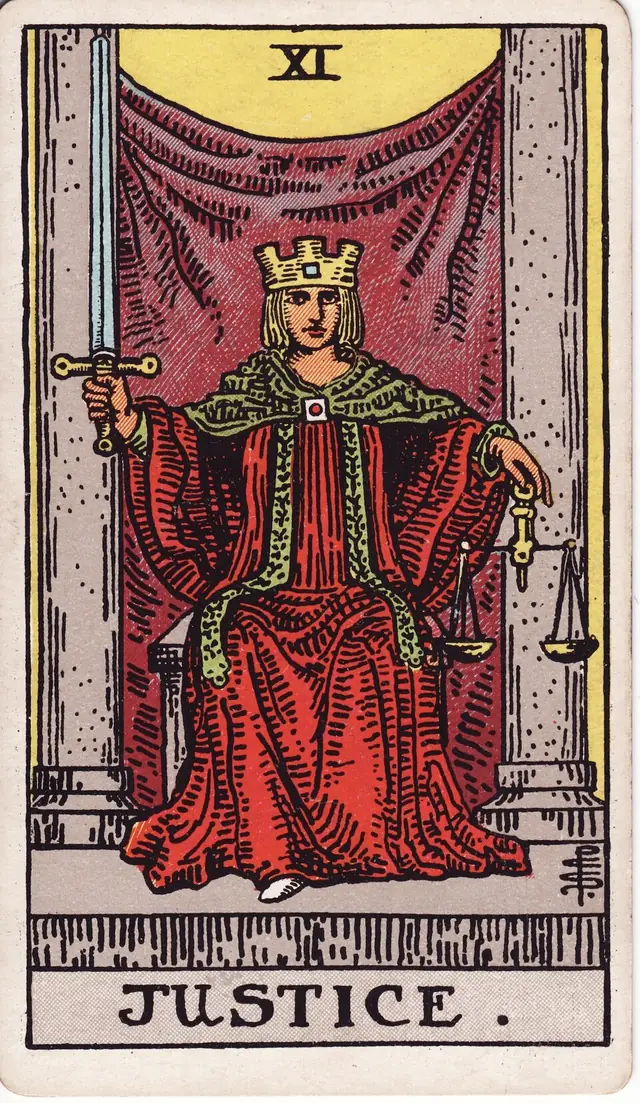
JusticeThe scales and sword could concern explicit, fair terms. Its role came from this question and final position, rather than a detached rule that Justice always meant one particular event.
Below the record, Moses wrote his own interpretation: he'd assumed warmth meant they were moving toward commitment. His difficulty was that the later cards felt less reassuring. That was more useful to send than asking a reader to explain every possible meaning. It also showed exactly where his interpretation had made a leap.
He checked whether the reader worked with existing spreads before assuming the format included them. If the arrangement had come from a guide or another reading, he'd have kept that origin and its labels too. His photograph could support the written record if images were accepted; it couldn't replace the missing question or positions.
Looking at the complete record, he could already see a distinction he hadn't seen while repeating the card names. Affection, time invested, and an agreement were related. They weren't the same thing. He could keep his first response beside a new interpretation without erasing how he had arrived at it.
Moses saved the photograph with the question, then gathered the cards. The cat occupied the empty space immediately. In the notebook, he crossed out commitment beneath the first position and wrote warmth instead. The question mark moved to where it belonged: beside the conversation he and Peter hadn't had.