The person who always had it handled.
The Emperor as how someone sees you: when being trusted with everything starts to feel like being seen only halfway.

Jo could tell which contractor had called by the way Dani said her name. The plumber required the blue folder. The electrician needed the photograph of the wall before the plaster went up. By Thursday, even Dani's mother was asking Jo where they kept things in a house that belonged to both of them.
They'd been together six years. Dani called her incredible. Jo knew it was affectionate, but lately the compliment landed like another job description. When Dani mentioned how calm she'd been through the renovation, Jo wanted to say that she'd cried in the builders' supply shop beside the cabinet handles.
The Emperor appeared when she asked how Dani might see her. In the Rider-Waite-Smith image, the ruler sits on a stone throne carved with rams' heads. The bare, firm setting gives his presence weight. Someone occupies a position and seems capable of holding it. Jo recognized the blue folder before she recognized herself.
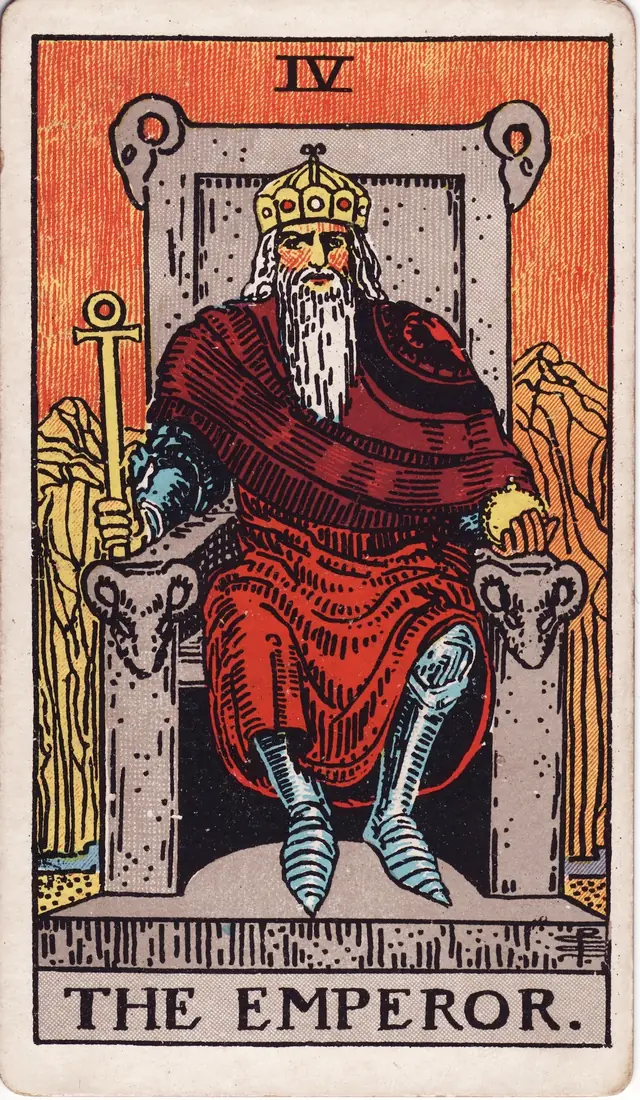
EmperorThe throne and rams' heads suggest authority and steadiness. In a perception position, the Emperor can explore what being relied on makes possible, and what it keeps out of view.
Upright, the Emperor can suggest respect, trust and confidence in your judgment. In a new connection, someone may see clear standards and feel drawn to your self-possession. In an established partnership, they may experience you as the person beside whom they can finally relax. Those qualities aren't restricted to any gender or age.
There can be attraction here, especially attraction to competence or a sense of protection. But respect doesn't tell the whole romantic story. A card about someone's impression can't establish their private feelings, and the ability to arrange a house doesn't explain whether you feel wanted inside it.
The Emperor reversed brings a different tension: strength can be experienced as rigidity, composure as distance, or authority as an impossible standard. It can also reveal the strain of trying to keep control. Jo saw one small part of that in herself. When Dani offered help, she'd sometimes corrected the method before accepting the offer.
That didn't make the unequal workload her fault. It gave her something specific to describe. She told Dani about the cabinet handles, including the part where she'd waited in the car until her face looked ordinary. Dani hadn't known. Jo had been hoping to be noticed while carefully removing every sign that she needed noticing.
Dani offered to organize a romantic weekend. Jo liked the thought, but asked for something less impressive first: take responsibility for the electrician, including the questions, the appointment and the follow-up. No reminders from her. Dani agreed, then asked which folder to use. Jo pointed to the shelf and let Dani find it.
On Saturday, the electrician rang while Jo was leaving for a swim. She stopped in the doorway automatically. Dani picked up the blue folder. Nothing about six years had been settled by one conversation, but this particular call had somewhere else to go. Jo took her goggles and left before she could become helpful.