He liked the woman on the stage.
The Queen of Wands as how someone sees you can hold strong attraction. It also asks whether admiration leaves room for your quieter self.

Elena wasn't an actor. She ran lighting for the little theatre above the pub, usually in black clothes with a pencil behind her ear. On opening night, though, she took the microphone to thank a volunteer who was leaving.
She made the room laugh, then cry a little. Across the tables, her new date looked delighted.
For the next month he kept introducing her as the brilliant, fearless one. She liked being admired. She liked him, too: he listened to her terrible technical stories and remembered the volunteer's name. But after each evening she noticed herself putting on one more bright performance before she could go home.
The Queen of Wands is an apt card for that impression. In the Rider-Waite-Smith image, the queen has a sunflower and a growing wand, with a black cat at her feet. Warmth, vitality and a private edge share the same picture. Being open to the room doesn't mean belonging to everyone in it.
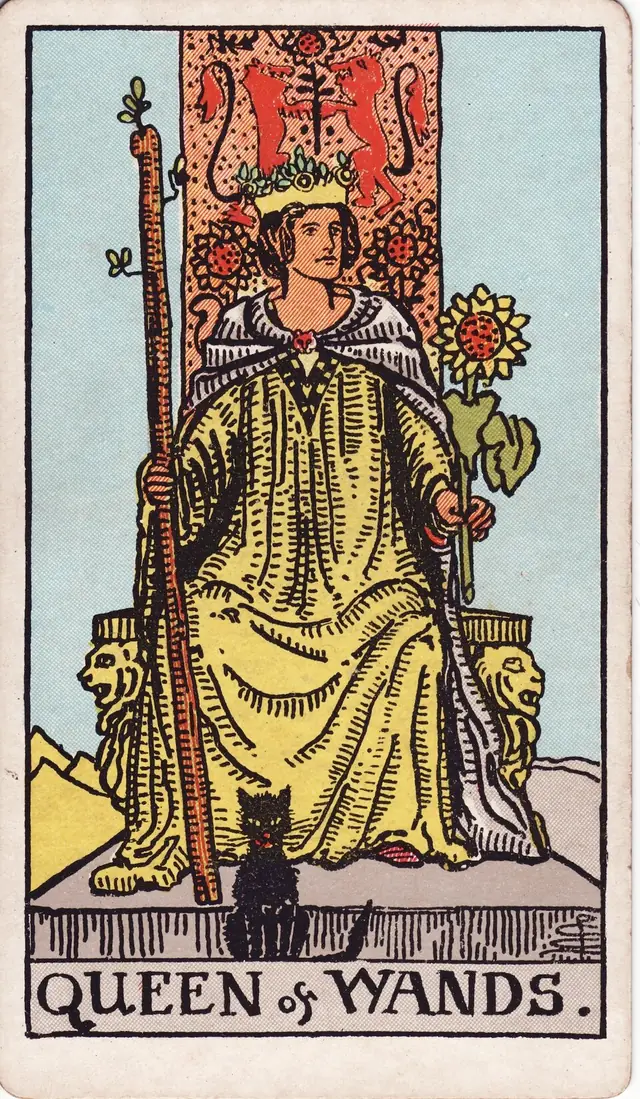
Queen of WandsThe sunflower and living wand suggest vitality; the cat keeps something independent in the scene. Attraction can grow around that presence without granting unlimited access to it.
Upright, the Queen of Wands as how someone sees you can suggest magnetism, confidence, generosity and desire. They may enjoy how fully you enter your own interests.
That impression can belong to a shy person discussing a favorite subject as readily as to someone holding a microphone. It isn't confined to women or to a particular look.
In early dating, it may describe obvious chemistry and curiosity about your life. In an established relationship, it can bring the person beneath the household routine back into view. After a breakup, it may reflect newly visible independence. In each setting, being drawn to that person and making room for a relationship remain different questions.
Elena's date invited himself to the next cast party. She said she was staying in to mend a torn costume and catch up on sleep. He teased her about becoming boring. The joke was small. What unsettled her was how quickly she began offering a more exciting alternative, as though rest required an apology.
Reversed, the Queen can suggest confidence being misread, guarded warmth or a connection caught in comparison. Someone may interpret independence as lack of interest. Equally, the person everyone calls radiant may be exhausted by maintaining the impression. Jealousy is possible in context, but the reversal doesn't prove a rival or establish that someone is intimidated.
Elena couldn't use the card to discover why he'd made the joke. She could notice what it had asked her to do. She invited him over on an ordinary Tuesday, explaining that there would be sewing on the table, leftovers for dinner and no party afterward. She wanted him there. She didn't have an evening's entertainment prepared.
He came, helped pin a hem badly, and asked why she'd been so quiet lately. This time she answered without making it funny. Their next hour was less sparkling than their first date. It was also the first time she hadn't been working to keep his admiration alive.
After he left, Elena put the costume back on its hanger. She still couldn't know whether the relationship would suit them. But the next invitation could be to a real evening in her life, including the parts without an audience.