She wanted him to be a little less understanding.
The King of Cups as feelings can suggest steady affection. Its value depends on whether calm makes honest contact possible.

When Rafi said she'd been offered a three-month fellowship abroad, Lee congratulated her, asked about the dates and found the town on a map. He sounded pleased. A week later, she realized she was annoyed with him for making it so easy.
They'd been together a year. She liked that he didn't turn every difficult subject into a crisis. After noisier relationships, his steadiness had felt like rest. Now she wanted evidence that her leaving would matter. When he asked about accommodation, she heard a person helping with a project instead of a partner facing a separation.
On Sunday, she told him she couldn't tell how he felt. Lee said he was trying to be supportive. Rafi believed him. That wasn't the same as having an answer she could meet. His support had left his own experience out of the room.
The sea is still moving
In the Rider-Waite-Smith King of Cups, the ruler sits above moving water. His presence hasn't stopped the sea. The image suggests a capacity to remain with emotion without being swept into every change. As feelings, the upright King of Cups can describe tenderness, considered affection and care that doesn't announce itself dramatically.
You may see this quality when someone remembers what matters, lets disagreement exist without punishment or takes time to answer and then returns when promised. Quiet affection can be substantial. The court title doesn't confine it to men, older partners or any particular family role.
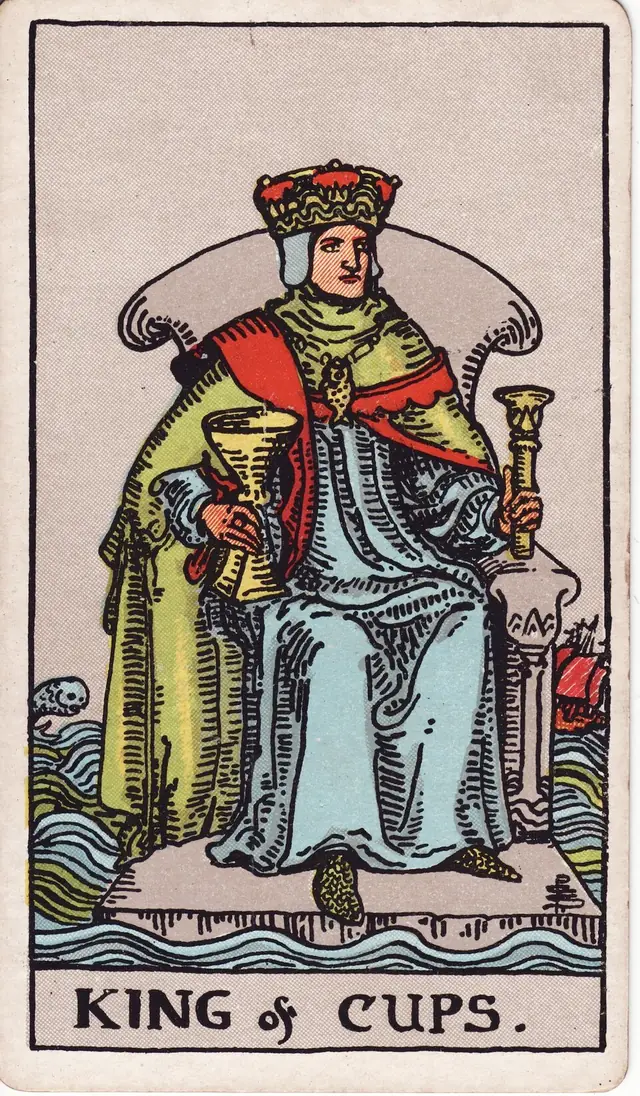
King of CupsThe moving water remains part of the scene. Emotional capacity becomes useful when a person can stay present and share enough of their own experience for a real exchange.
But quietness alone doesn't establish emotional maturity or hidden love. The question is what the restraint allows between you. Can you understand their needs as well as reveal yours? Can they be disappointed without making you responsible for removing the disappointment? A feelings card can't certify what is inside someone who hasn't chosen to say.
Reversed, the King can suggest suppression, indirect expression or a composed exterior that keeps closeness difficult. Soothing words may delay a decision. One person may become the one who has feelings while the other evaluates them calmly. The imbalance deserves attention without using a card to diagnose anyone or assign a hidden motive.
Rafi asked Lee whether he was worried about the fellowship, rather than whether he supported it. He admitted that he was. He'd only recently begun imagining them as part of each other's daily lives.
He feared she would discover a life she preferred without him. He'd kept that quiet because he didn't want his fear to become a reason she stayed.
She couldn't promise that nothing would change. She could tell him that choosing the fellowship wasn't a decision to end their relationship. They discussed the visit he could manage, how often they wanted to speak and what they would say if the arrangement stopped working. The conversation held uncertainty without requiring either to sound serene.
On her last evening before leaving, Lee helped weigh her suitcase. He also said he would miss her badly. Rafi put down the shoes she'd been trying to fit and sat beside him for a while. His feelings hadn't become a problem she had to solve. At last, they had become something they could share.